Aloha ʻĀina • Wahi Pana • ʻOhana Stewardship • Cultural Preservation • Puna Makai
ʻOhana Protecting Place. Knowledge Moving Across Generations.
Some places are beautiful.
Other places hold stories.
Memory.
Genealogy.
Practice.
Responsibility.
Kaʻakepa is one of those places.
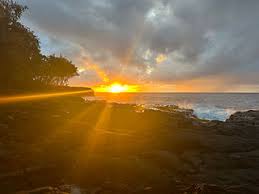
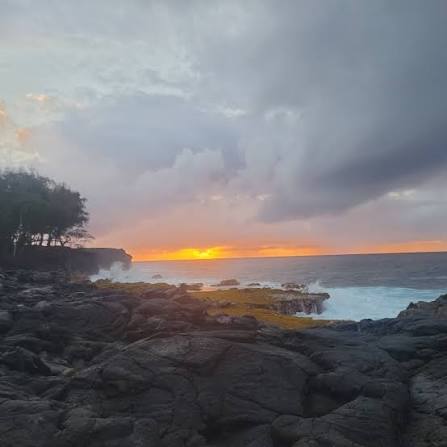
Along the coastline of Puna makai, Kaʻakepa remains one of the area’s treasured wahi pana — a storied place where tidepools, archaeological resources and a historic uluniu are intertwined with generations of ʻohana who have gathered, learned and cared for this coastline.
Nā Lauʻō ʻo Kaʻakepa is a hui of family and community members dedicated to protecting, perpetuating and enhancing Kaʻakepa.
Their mission is beautifully clear:
Preserve and protect Kaʻakepa now and for future generations.
For Support Local Hawaii, Nā Lauʻō demonstrates something fundamental about stewardship.
The strongest protection for a place often begins with people who understand that caring for it isn’t simply something good to do.
It is their kuleana.
Kaʻakepa, Puna, Hawaiʻi
Kaʻakepa sits along the Puna coastline within the ahupuaʻa of Malama.
It is a place shaped by both natural and cultural history.
Tidepools meet the coastline.
Archaeological resources remain across the landscape.
A historic uluniu — coconut grove — connects the area with generations of Hawaiian relationships with niu.
Families and lineal descendants have gathered here for generations.
These qualities make Kaʻakepa valuable.
They also make it vulnerable.
As access, recreation and human activity increase along Puna makai, places like Kaʻakepa can experience misuse, extraction, disturbance and pressures that slowly diminish the very qualities that make them special.
Nā Lauʻō exists because simply appreciating Kaʻakepa is not enough.
Someone must accept responsibility for caring for it.
Nā Lauʻō: The Many Leaves
There is something beautiful in the image carried by the name Nā Lauʻō.
Many leaves.
Individual parts connected to something larger.
ʻOhana.
Community members.
Kūpuna.
Mākua.
ʻŌpio.
Keiki.
Each bringing different experiences and abilities.
Each contributing to the wellbeing of the whole.
That spirit can be seen in the way stewardship happens at Kaʻakepa.
It isn’t about a single person protecting a place.
It is about creating a community capable of caring for it together.
Lā Aloha ʻĀina
Stewardship becomes real when hands meet ʻāina.
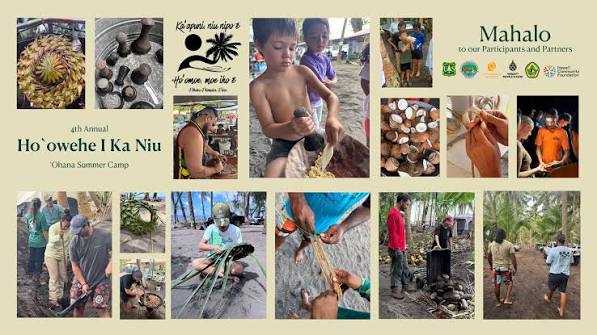
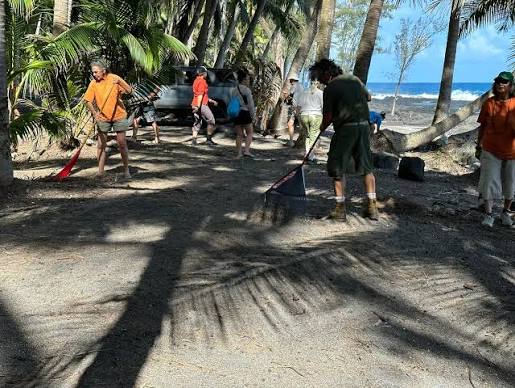
Through regular Lā Aloha ʻĀina, ʻohana and community members gather at Kaʻakepa to mālama the place together.
These gatherings create opportunities for hands-on stewardship, observation, education and cultural learning.
Work may include caring for vegetation, managing organic material, observing environmental conditions, learning about niu, removing impacts left by inappropriate use, monitoring resources and simply spending meaningful time with place.
But the most important thing being cultivated may not be something visible.
Relationship is being cultivated.
People return.
They observe.
They learn what changes.
They hear stories.
They understand why particular resources matter.
They begin recognizing what healthy stewardship looks like.
Eventually, someone who arrived as a participant becomes someone capable of teaching the next person.
That is how stewardship becomes generational.
From Kūpuna to Keiki
Nā Lauʻō recognizes that protecting Kaʻakepa means protecting more than physical resources.
Knowledge must survive too.
Intergenerational transmission allows ʻike and practice to move from kūpuna to mākua, from mākua to ʻopio, and eventually from today’s keiki to generations not yet born.
At Kaʻakepa, learning does not have to happen inside a classroom.
The coastline becomes the classroom.
The uluniu becomes the classroom.
The tidepool becomes the classroom.
Moʻolelo becomes the classroom.
Kūpuna become teachers.
Observation becomes a lesson.
And mālama becomes practice.
This kind of learning helps keiki understand that Hawaiʻi is not simply somewhere they live.
It is somewhere they belong — and somewhere they have a responsibility to care for.
Sometimes Stewardship Means Letting a Place Rest
One of the most important lessons within Nā Lauʻō’s approach is also one of the simplest.
Not every interaction with ʻāina requires taking something.
Sometimes stewardship means not extracting.
Not harvesting.
Not disturbing.
Not filling a place with noise.
Not expecting the ʻāina to constantly provide something for us.
Sometimes the most loving thing people can do is allow a place to rest.
Observe.
Listen.
Give back.
That philosophy challenges an increasingly common idea that every beautiful place exists primarily for human recreation.
Wahi pana are more than destinations.
They carry relationships extending far beyond the people visiting them today.
Respecting place sometimes means asking less from it.
Protecting Kaʻakepa Through Community Stewardship
Nā Lauʻō’s stewardship is supported by Pōhaku Pelemaka.
Pōhaku Pelemaka has secured right-of-entry for two State of Hawaii Department of Land and Natural Resources parcels and a Hawaii County parcel in the Kaʻakepa area.
The organization provides Nā Lauʻō with important infrastructure including liability insurance, safety training, supplies, stewardship protocols and authorized access.
Together, Pōhaku Pelemaka and Nā Lauʻō are working toward implementing an ʻOhana Stewardship and Adaptive Management Plan for Kaʻakepa.
This partnership demonstrates how grassroots stewardship can grow stronger when community knowledge is supported with organizational capacity.
ʻOhana bring relationship and knowledge.
Community members bring hands and commitment.
Organizations provide structure and resources.
Researchers contribute information.
Government agencies provide access and partnership.
And together, the place receives better care.
Protecting the Uluniu
One of Kaʻakepa’s remarkable resources is its historic uluniu.
The grove contains a tremendous diversity of niu and has become the focus of research, documentation, restoration and cultural learning.
Work underway at Kaʻakepa is documenting niu varieties, recording characteristics, protecting genetic diversity and developing knowledge that can help future generations care for historic coconut groves throughout Hawaiʻi.
The work becomes especially important as threats such as Coconut Rhinoceros Beetle spread across Hawaiʻi Island.
Protecting these niu isn’t simply about preserving trees.
Niu represents food.
Fiber.
Cordage.
Medicine.
Tools.
Shelter.
Cultural practice.
Genealogy.
And generations of human relationships with one of the most useful plants carried throughout Oceania.
Protecting the uluniu means protecting possibilities for future generations.
Stewardship Backed by Community Investment
The work at Kaʻakepa has also gained broader community support.
Through the Puna Strong initiative, Pōhaku Pelemaka and Nā Lauʻō ʻo Kaʻakepa received support for their collaborative Mālama Kaʻakepa work.
The project focuses on addressing environmental misuse and developing a comprehensive stewardship and management plan for the area.
That investment recognizes something important:
Community stewardship isn’t informal because it lacks value.
Quite the opposite.
Local knowledge, relationships and sustained presence are infrastructure.
When those things are properly supported, communities become better equipped to protect the places they know best.
A Place Worth Standing Up For
The relationship between community and Kaʻakepa has also been tested.
Following the 2018 Kīlauea eruption, the historic Pohoiki boat ramp became inaccessible when volcanic activity dramatically reshaped the coastline.
Kaʻakepa was subsequently considered as one possible alternative location for boating infrastructure.
Puna ʻohana and fishermen organized.
Community members advocated for restoring Pohoiki rather than developing Kaʻakepa and other wahi pana along the coastline.
Thousands added their voices.
The message was clear:
Some places are worth protecting before they are lost.
That advocacy is part of the larger story of Kaʻakepa.
Stewardship isn’t only cleaning.
It isn’t only planting.
It isn’t only monitoring.
Sometimes stewardship means standing up for a place when decisions about its future are being made.
Why Support Local Hawaii Recognizes Nā Lauʻō ʻo Kaʻakepa
Support Local Hawaii believes some of Hawaii’s most important stewards may never have large organizations behind them.
Sometimes stewardship lives within a hui.
An ʻohana.
A group of neighbors.
People who simply keep showing up.
Nā Lauʻō ʻo Kaʻakepa embodies that kind of stewardship.
They mālama a wahi pana.
They bring generations together.
They protect cultural and natural resources.
They learn from kūpuna.
They create opportunities for keiki.
They help care for the historic uluniu.
They observe environmental change.
They advocate for place.
And perhaps most importantly:
They return.
Again and again.
Because true stewardship is not a single event.
It is a relationship maintained over time.
For their continuing dedication to protecting Kaʻakepa and perpetuating a culture of Aloha ʻĀina across generations, Support Local Hawaii is proud to recognize Nā Lauʻō ʻo Kaʻakepa as Hawaiʻi Stewards.
Stewardship in Action
Mālama Kaʻakepa
Wahi Pana Protection
Preserving Kaʻakepa’s cultural landscape, archaeological resources, coastline, tidepools and historic uluniu.
Aloha ʻĀina
Bringing ʻohana and community together for hands-on stewardship, observation and learning.
Intergenerational Knowledge
Creating opportunities for ʻike and cultural practice to move from kūpuna to keiki.
Uluniu Stewardship
Helping protect, document and restore Kaʻakepa’s historic niu resources.
Community Monitoring
Observing conditions and gathering knowledge that can inform responsible long-term management.
ʻOhana Stewardship & Adaptive Management
Working toward a community-grounded framework for protecting Kaʻakepa into the future.
Advocacy for Place
Standing for the protection of Kaʻakepa as a wahi pana of Puna makai.
For Generations Yet to Come
There may be no better measure of stewardship than this question:
Will this place be healthier because we were here?
Not just tomorrow.
Not next year.
But when today’s keiki return with their own keiki.
Will the niu still stand?
Will the tidepools still hold life?
Will families still know the moʻolelo?
Will cultural practices still have somewhere to live?
Will future generations understand why Kaʻakepa mattered to the people who came before them?
Nā Lauʻō ʻo Kaʻakepa is working toward an answer.
ʻAe.
Yes.
Because someone cared.
Because someone taught.
Because someone listened.
Because someone stood up.
Because someone returned to mālama.
And because enough people understood that protecting Hawaiʻi begins with accepting responsibility for the places entrusted to us.
Mahalo nui loa to Nā Lauʻō ʻo Kaʻakepa, the ʻohana of Kaʻakepa, Pōhaku Pelemaka, and every kūpuna, practitioner, volunteer, researcher, partner, ʻopio and keiki helping care for this extraordinary place.
Mālama Kaʻakepa.
Aloha ʻĀina.
Aʻo aku, aʻo mai.
Protect what future generations cannot replace.
This is stewardship in action.
Connect With Nā Lauʻō ʻo Kaʻakepa
Stewardship Hui: Nā Lauʻō ʻo Kaʻakepa
Location: Kaʻakepa, Malama, Puna, Hawaiʻi Island
Supported By: Pōhaku Pelemaka
Stewardship Areas: Aloha ʻĀina • Wahi Pana Protection • Cultural Stewardship • Coastal Stewardship • Uluniu & Niu • Intergenerational Knowledge • Community Resilience
Mission: Preserve and protect Kaʻakepa now and for future generations
Support Local Hawaii Recognition: Hawaiʻi Steward
Join the effort to mālama Kaʻakepa and help ensure this wahi pana remains protected, understood and loved for generations to come.