Under the Hood: The Stewardship Operating System Behind Support Local Hawaii
Support Local Hawaii may look like a place to discover local organizations, events, projects, resources, stories, and ways to help. Underneath it, something much larger has been taking shape.
We think of it as a Stewardship Operating System.
Not an operating system in the traditional technology sense.
A human one.
A framework designed to help people, organizations, businesses, farmers, practitioners, stewards, projects, resources, knowledge, stories, events, and opportunities find one another — and make it easier for good work already happening across Hawaiʻi to become more connected, supported, and sustainable.
The idea is simple:
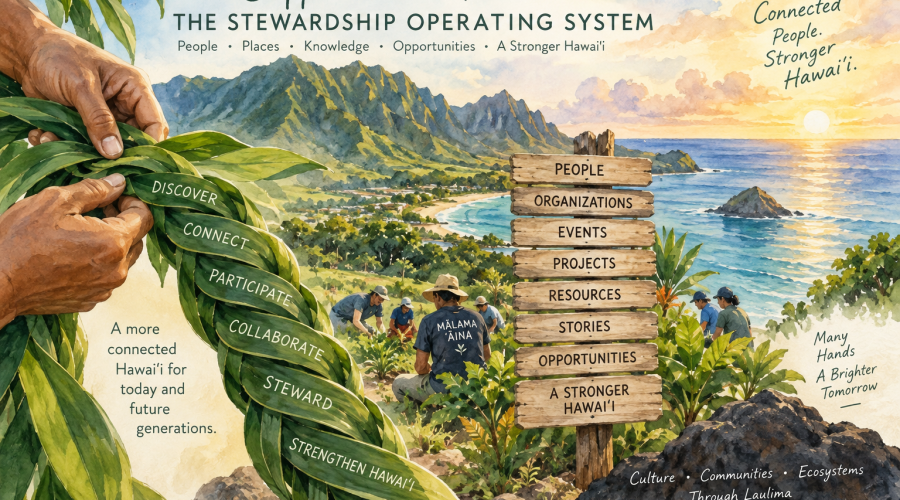
DISCOVER → CONNECT → PARTICIPATE → COLLABORATE → STEWARD → STRENGTHEN HAWAIʻI
That cycle has quietly shaped much of what has been built behind the scenes at Support Local Hawaii.
And it explains why SLH was never intended to be just another directory.
The Problem Isn’t Always a Lack of Good Work
Across Hawaiʻi, extraordinary work is already happening every day.
Community organizations are serving families. Farmers are growing food. Cultural practitioners are perpetuating knowledge. Volunteers are restoring ʻāina. Local businesses are supporting their communities. Educators are teaching. Stewards are protecting watersheds and coastlines. Neighbors are preparing for emergencies. Storytellers are preserving experiences and knowledge. People everywhere are looking for meaningful ways to contribute.
Often, the missing ingredient isn’t another organization or another program.
It’s connection.
Someone wants to volunteer but doesn’t know where they’re needed.
A project needs equipment, materials, expertise, or helping hands.
A community organization is doing important work that many people simply haven’t discovered.
A local business wants to give back but doesn’t know which efforts need support.
A farmer has knowledge, products, needs, opportunities, and a story that could connect with many different parts of the community.
An event introduces someone to an organization. That organization leads them to a project. The project introduces them to a steward. The steward shares a story. That story inspires someone else to participate.
Those relationships are where much of the real potential lives.
So rather than asking only:
“How do we list everything happening in Hawaiʻi?”
we began asking a different question:
“How can we help the pieces find and strengthen one another?”
That question changed everything.
Building Connective Infrastructure for Stewardship
The Stewardship Operating System is the architecture underneath Support Local Hawaii.
It treats Hawaii’s stewardship ecosystem not as separate categories, websites, organizations, or initiatives, but as an interconnected network.
Culture connects to community.
Community connects to ʻāina.
ʻĀina connects to food.
Food connects to farmers.
Farmers connect to local businesses.
Businesses connect to projects.
Projects connect to volunteers.
Volunteers become stewards.
Stewards carry knowledge.
Knowledge becomes stories and resources.
Stories inspire participation.
Events create relationships.
Relationships create collaboration.
And collaboration builds capacity.
SLH’s role within that system is not to control those relationships.
It is to help make them possible.
Discovery Is Only the Beginning
A directory traditionally answers a question:
What exists?
That’s useful — but stewardship requires more.
The next questions are:
How do I connect with it?
How can I participate?
What does this effort need?
Who else should know about it?
What could we accomplish together?
That is why discovery throughout SLH is designed to lead somewhere.
A person discovering a stewardship organization should be able to find its work, upcoming gatherings, projects, needs, stories, resources, and ways to participate.
A project shouldn’t simply describe what is happening. It should be able to connect with people who can contribute time, knowledge, materials, funding, equipment, professional skills, or relationships.
A story shouldn’t disappear into an archive after publication. It can introduce people to practitioners, places, organizations, projects, and knowledge.
An event isn’t simply a date on a calendar. It can become an entry point into long-term stewardship.
Every part of the system can strengthen another.
The Stewardship ʻOhana
At the heart of SLH are the people and organizations doing the work.
The Stewardship ʻOhana creates a way to discover and connect with stewards across many parts of Hawaii’s ecosystem — including culture, community, environment, food, education, local economy, healing and well-being, and other forms of service.
But the intention goes beyond creating profiles.
A steward can become a node in a wider network.
Their profile can connect people to their work.
Their work can connect to projects.
Their projects can connect to opportunities.
Their events can appear through Gather.
Their knowledge can become a resource.
Their experiences can become stories.
Their needs can become opportunities for laulima.
The profile is not the destination.
The relationship is.
Gather: Turning Events Into Pathways
Events are one of the most natural ways people enter community life.
A cleanup, workshop, fundraiser, cultural gathering, volunteer day, farmers market, training, educational program, or community meeting can be someone’s first encounter with an organization or cause.
Gather was created to make those opportunities easier to discover.
But within the Stewardship Operating System, Gather serves another purpose.
It creates pathways.
Someone might attend a restoration day and later become a regular volunteer.
Someone attending a workshop may discover a practitioner whose work they continue supporting.
A family visiting a community event may learn about a local organization they never knew existed.
A gathering can create the first connection in a relationship lasting years.
That makes an events system much more than a calendar.
It becomes part of Hawaii’s stewardship infrastructure.
Projects: Where Stewardship Becomes Tangible
Some of the most important work happens around clearly defined needs.
Restore this place.
Build this resource.
Support this community.
Document this knowledge.
Help this farm.
Create this program.
Solve this problem.
SLH Projects are designed to make that work visible and easier to support.
A project can become a gathering point around which organizations, volunteers, businesses, donors, practitioners, and community resources converge.
Instead of simply saying, “Here is what we’re doing,” a project can begin asking:
What do we need?
Who could help?
What resources already exist?
Who else is working on this?
Where could collaboration reduce duplication?
That is the beginning of something larger than project promotion.
It is coordination.
Build Together: From Audience to Participation
Most websites divide people into two groups:
the organization doing the work and the audience watching it.
Stewardship doesn’t work particularly well that way.
Communities contain enormous amounts of knowledge, creativity, professional skill, lived experience, relationships, equipment, time, and generosity.
Build Together is rooted in the belief that those capacities should have pathways into the work.
Instead of SLH attempting to build every solution internally, a need can become an invitation:
Who knows how to solve this?
Who has done something similar?
Who can contribute?
Who should we partner with?
What already exists that we could strengthen rather than recreate?
This is an important principle behind the entire operating system:
SLH doesn’t need to be the hero.
Often, its most valuable role is helping the right people find one another.
Take Action: Making the Next Step Clear
Awareness without a pathway to action has limits.
Someone may care deeply about an issue but have no idea what to do next.
Take Action is designed to shorten that distance.
Volunteer.
Attend.
Donate.
Share knowledge.
Support a local organization.
Help a project.
Learn.
Prepare.
Offer a resource.
Connect someone.
Sometimes stewardship begins with a major commitment.
More often, it begins with one clear next step.
The operating system should make that step easier to find.
Stories as Stewardship Infrastructure
Stories have a special place within this system.
They preserve experience.
They carry knowledge.
They introduce people.
They help communities understand why work matters.
And they can reveal connections that structured databases cannot.
A story about a farmer may lead someone to their farm.
A story about restoration may introduce volunteers to a stewardship hui.
A practitioner’s story may preserve knowledge that deserves to travel carefully across generations.
A community experience may reveal an unmet need.
A project story may inspire another community facing a similar challenge.
For SLH, storytelling isn’t simply content marketing.
Stories are connective tissue.
They help people understand not only what exists, but the people, places, relationships, histories, and kuleana behind the work.
The Steward Portal: Giving Stewards Agency
An ecosystem like this cannot depend indefinitely on one person or one small team updating everything.
Nor should it.
The people closest to the work usually understand it best.
The Steward Portal is part of a longer-term shift toward community agency: creating ways for stewards to participate in maintaining their presence, opportunities, projects, events, resources, and information within the ecosystem.
That matters for another reason.
A healthy stewardship commons should not require Support Local Hawaii to sit at the center of every relationship.
SLH should help create infrastructure that communities can increasingly use themselves.
The stronger the network becomes, the less dependent it should be on a single gatekeeper.
Emergency Stewardship
The same connective principles become especially important during emergencies.
Preparedness and response depend heavily on relationships established before a crisis occurs.
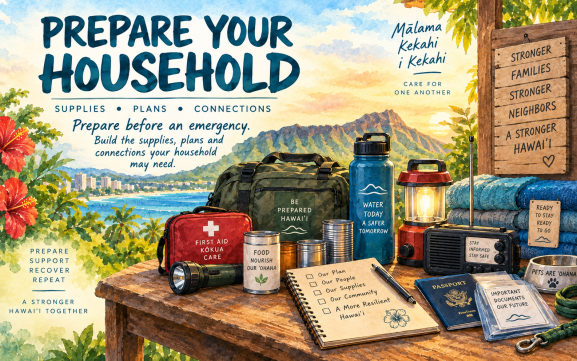
SLH’s emerging Emergency Stewardship framework follows a cycle:
READY → ACTIVATED → RESPONSE → RECOVERY → READY
The role of SLH is not to replace Hawaiʻi Emergency Management Agency, county Civil Defense agencies, first responders, medical professionals, utilities, government agencies, or experienced disaster-response organizations.
Their official information and expertise come first.
The opportunity for SLH is different.
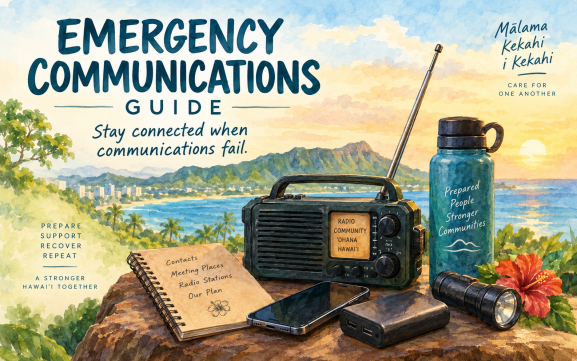
It can help strengthen the connective layer surrounding those systems: preparedness resources, trusted organizations, community networks, communication guidance, volunteer pathways, recovery resources, and locally relevant information.
And when recovery eventually moves out of the headlines, stewardship continues.
Prepared communities are built long before the emergency alert arrives.
Governance Underneath the Technology
An operating system also needs rules.
For SLH, those rules aren’t simply technical.
They are ethical.
The Founding Charter and Kuleana Charter establish principles for how the platform should grow and how decisions should be made.
They create a simple but important test for new technology, partnerships, funding, programs, data practices, and opportunities:
Does this serve Hawaii’s Culture, Communities, or Ecosystems?
Does it honor community agency?
Does it protect trust?
Does it respect the people and knowledge involved?
Are we strengthening work that already exists — or unnecessarily duplicating it?
Would we feel pono explaining this decision publicly?
Those questions matter even more as technology becomes more powerful.
Because the goal isn’t to build the largest possible platform.
The goal is to steward a useful one.
Technology Should Serve Relationships
There is plenty of technology underneath Support Local Hawaii.
Databases.
Structured information.
Search and discovery.
Profiles.
Content systems.
Project infrastructure.
Resource libraries.
Community submissions.
Workflows.
Automation.
Connections between different types of information.
And increasingly, opportunities to use artificial intelligence to help organize, maintain, discover, and connect that knowledge.
But none of those things are the point.
Technology should reduce friction between people and meaningful participation.
It should help a volunteer discover where they’re needed.
Help a community organization become easier to find.
Help a farmer reach people who value their work.
Help a project locate resources.
Help knowledge remain discoverable.
Help communities prepare.
Help someone find their first doorway into stewardship.
If the technology does that, it is serving its purpose.
A Living Stewardship Graph
Perhaps the easiest way to understand what is being built is to imagine SLH not as a collection of webpages, but as a living network.
People ↔ Organizations ↔ Places ↔ Projects ↔ Events ↔ Stories ↔ Resources ↔ Needs ↔ Opportunities ↔ Businesses ↔ Knowledge ↔ Communities
Each connection adds context.
Each contribution can strengthen something else.
And over time, those relationships can form something extremely valuable:
a living map of Hawaii’s stewardship ecosystem.
Not a map that claims ownership over the ecosystem.
A map that helps people navigate it.
That distinction matters.
The ecosystem belongs to Hawaii’s people and places.
SLH’s kuleana is to steward the connections.
Designed for Laulima
There is another reason to build this way.
No single organization can solve Hawaii’s challenges.
And no website should pretend it can.
The knowledge, relationships, cultural understanding, professional expertise, lived experience, resources, and capacity needed already exist across thousands of people and organizations.
The challenge is helping those strengths meet.
That is why laulima — many hands working together — is not simply a value displayed on SLH.
It is becoming part of the architecture.
A need can find a resource.
A project can find a collaborator.
A volunteer can find a place to serve.
A business can find a community effort to support.
A story can find an audience.
Knowledge can find the people who need it.
And people who may never otherwise have met can discover that they are working toward something shared.
What We’re Really Building
Support Local Hawaii is still growing.
There is much more to connect, improve, learn, and build alongside the people doing this work across Hawaiʻi.
But the direction is clear.
We aren’t trying to build another website people occasionally visit.
We are working toward a durable stewardship commons — connective infrastructure that makes it easier to discover good work, build relationships, participate meaningfully, collaborate across boundaries, share knowledge, mobilize resources, prepare communities, and care for Hawaiʻi across generations.
A place where:
Stories preserve knowledge.
Stewards become discoverable.
Projects find collaborators.
Needs find resources.
Events create relationships.
Organizations gain support.
Communities strengthen preparedness.
People find meaningful ways to participate.
And stewardship becomes easier to discover, join, sustain, and pass forward.
That is the Stewardship Operating System taking shape underneath Support Local Hawaii.
Not technology for technology’s sake.
Not another platform trying to place itself at the center.
Infrastructure for helping Hawaii’s people, places, knowledge, organizations, and opportunities find and strengthen one another.
Aloha in the approach.
Kuleana in the decisions.
Pono in the work.
Laulima in how we build.
And always, the question underneath it all:
Does this strengthen Hawaii’s Culture, Communities, or Ecosystems while honoring the people, knowledge, relationships, and ʻāina involved?
If the answer is yes, we keep building.