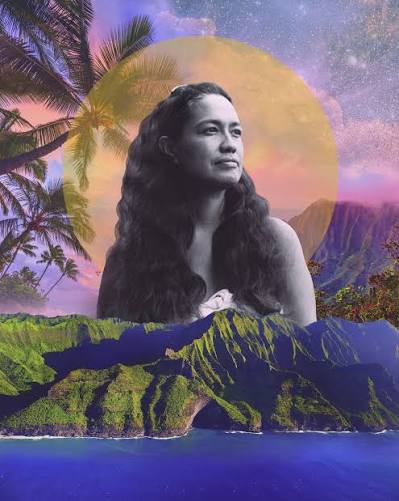
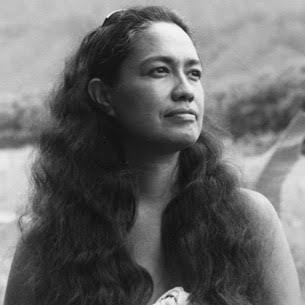
Scholar. Poet. Teacher. Organizer. A Voice That Changed Hawaiʻi.
Culture · Community · Education · Aloha ʻĀina
There are people who inherit knowledge.
There are people who protect it.
And there are people who spend their lives creating space for future generations to stand inside it.
Haunani-Kay Trask did all three.
A Native Hawaiian scholar, poet, educator, political theorist, organizer and international advocate for Indigenous peoples, Haunani-Kay Trask spent decades challenging Hawaiʻi—and institutions within Hawaiʻi—to confront fundamental questions about land, culture, sovereignty, colonialism, tourism, identity, education and the future of Kānaka Maoli.
She was not known for asking those questions quietly.
Her voice could be fierce. Her arguments could be confrontational. Her work generated admiration, disagreement and controversy. But separating that forcefulness from her legacy would mean separating the woman from the work.
Trask believed Hawaiian people should speak for themselves.
She fought for Hawaiian lands and political self-determination.
She insisted that Hawaiian knowledge belonged not at the margins of higher education in Hawaiʻi, but within its intellectual center.
And she helped build a place where generations of students could carry that work forward.
Creating Space for Hawaiian Knowledge
Haunani-Kay Trask began her academic career at the University of Hawaii at Mānoa in 1981, joining the Department of American Studies with expertise in feminist theory and Indigenous studies.
Over a 30-year career at UH Mānoa, she became one of the people credited with co-founding the contemporary field of Hawaiian Studies and served as founding director of the Center for Hawaiian Studies—the institution that would eventually become part of the Hawaiʻi nuiākea School of Hawaiian Knowledge.
That achievement reaches far beyond the construction of an academic program.
The Center created physical and intellectual space in which Hawaiian history, knowledge, political thought, language and culture could be studied from Hawaiian perspectives and where Native Hawaiian students could encounter their own people not simply as subjects being studied, but as producers and carriers of knowledge.
The physical development of the Center also occurred alongside the restoration of Kānewai, where students and kūpuna reopened an ancient ʻauwai system, loʻi kalo and māla ʻai. Hawai’inuiākea describes the establishment of the Center and completion of its five-acre complex as part of the longer effort by Hawaiians to reclaim the education of their own people through their own culture.
For Trask, education was never simply about earning a credential.
It could be a place where identity was remembered.
Where history was reclaimed.
Where another generation learned that Hawaiian knowledge belonged.
A Native Daughter
Trask’s influence extended far beyond the classroom.
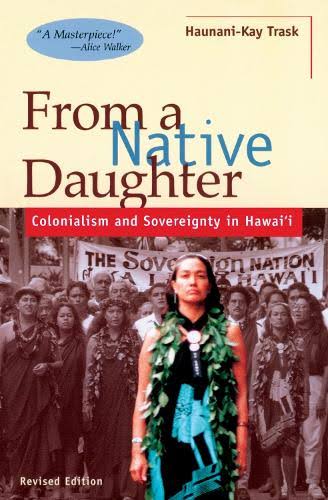
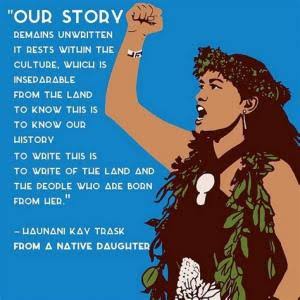
Her 1993 collection From a Native Daughter: Colonialism and Sovereignty in Hawaiʻi became one of her most influential works. Through essays addressing Hawaiian history, colonialism, racism, tourism, feminism, political organizing and sovereignty, Trask presented an explicitly Native Hawaiian critique of the political and social structures surrounding contemporary Hawaiʻi.
The book generated intense debate in Hawaiʻi and internationally and was expanded in a revised edition published by University of Hawaiʻi Press in 1999.
She also wrote poetry and political theory, delivered speeches, produced essays and other public scholarship, and treated writing and public advocacy as interconnected forms of work. UH researchers studying her legacy have described a body of intellectual production spanning poetry, political theory, community leadership, educational program-building and Indigenous advocacy.
For Trask, words were not separate from the world.
They were one way of acting within it.
Land Is Part of the Story
Her work was also rooted in ʻāina.
Trask became involved in significant land struggles on Oʻahu. University of Hawaii accounts document her opposition to the eviction of Hawaiians from Sand Island, proposed development affecting the Heʻeia wetlands near the area where she grew up, and gentrification in Waimānalo. These struggles were connected to her broader political arguments concerning Hawaiian land and sovereignty.
That relationship between people, culture and ʻāina matters.
Culture does not exist independently of place.
Neither does community.
Neither does food.
Neither does language.
Neither does memory.
The protection of Hawaiian culture and the protection of Hawaiian lands repeatedly intersected throughout Trask’s work.
Every part connects. Every action counts.
The Lāhui
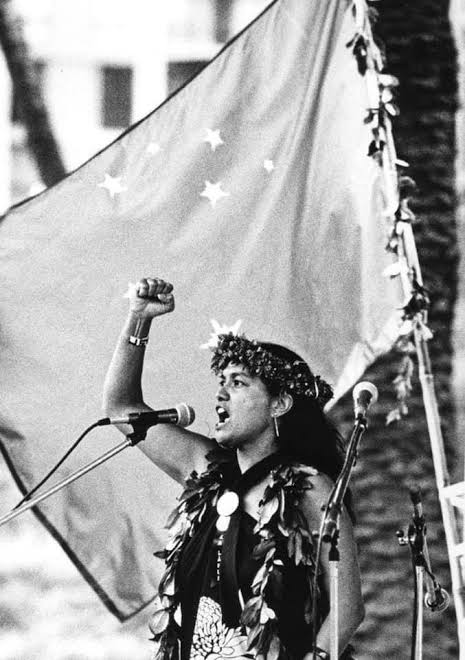
Trask was also a founder of Ka Lāhui Hawaiʻi and became a prominent participant in the modern Hawaiian and Hawaiian sovereignty movements. Her work connected scholarship with political organizing and advocacy for Native Hawaiian self-determination.
Her advocacy also reached well beyond Hawaiʻi.
Trask developed relationships with Indigenous peoples internationally, including communities in North America, Māori in Aotearoa and Basque people in Spain. Her international work brought her to United Nations gatherings in Geneva and Durban and situated Hawaiian political and cultural questions within broader conversations among Indigenous peoples.
The particulars of those movements, and the political positions Trask advocated, remain subjects of continuing debate.
The historical impact of her participation in them is unmistakable.
She helped make questions of Hawaiian identity, land, education, political authority and self-determination impossible to treat as peripheral questions about Hawaiʻi.
Teacher
Perhaps one of the clearest ways to understand Haunani-Kay Trask’s continuing influence is not through a speech or a book.
It is through her students.
UH colleagues and former students have repeatedly described her influence on generations of Kānaka who entered the university, embraced Hawaiian identity, pursued scholarship and accepted their own kuleana to their communities.
Her influence extended across Hawaiian Studies and into American Studies, Indigenous Studies, political science, education, literature, feminist studies and other disciplines.
And that transmission continues.
In 2026—five years after Trask’s death—UH profiled graduating student Kawaiolaʻakealiʻi Kapuni, who identified Trask as an early role model and described From a Native Daughter as profoundly influential in shaping her development as a Native Hawaiian feminist. Kapuni’s own aspirations include creating a bilingual ʻāina-stewardship program on Maui connecting ʻōlelo Hawaiʻi, ancestral lands, food and knowledge systems.
One generation teaches another.
And eventually the student carries something forward that the teacher will never personally see.
A Legacy That Continues
Haunani-Kay Trask retired from UH Mānoa in 2010.
In 2019, the American Studies Association awarded her its Angela Y. Davis Prize for Public Scholarship, recognizing scholarship used for the public good. In 2021, she was elected to the American Academy of Arts and Sciences.
She died on July 3, 2021.
But her work did not end there.
The books remained.
The students remained.
The institutions remained.
The questions remained.
And the students taught other students.
In 2023, the University of Hawaii Board of Regents posthumously awarded Trask an Honorary Doctorate of Humane Letters, recognizing her contributions to Native Hawaiian education, scholarship, leadership and public life. The university’s nomination specifically pointed toward the continuing influence of Trask’s students—and their students—on Hawaii’s academic and political landscape.
That is an important distinction.
Being remembered is one kind of legacy.
Continuing to move through other people’s hands is another.
Stewardship in Action
Across her life and career, Haunani-Kay Trask’s work included building Hawaiian Studies within the University of Hawaii; teaching and mentoring generations of students; writing scholarship, political essays and poetry; organizing around Hawaiian sovereignty and self-determination; participating in struggles involving Hawaiian lands; advocating internationally alongside Indigenous peoples; and challenging institutions—including the university where she worked—to make greater space for Hawaiian people and Hawaiian knowledge.
Her relationship with those institutions was not simple. UH itself has described its relationship with Trask as “complex,” while crediting her criticism, advocacy, scholarship and influence with making the university a different institution.
That complexity belongs in her story.
Because stewardship does not always look like agreement.
Sometimes it looks like teaching.
Sometimes building.
Sometimes protecting.
Sometimes questioning.
And sometimes it means refusing to become quiet about something you believe future generations cannot afford to lose.
What Remains
A voice can fall silent.
What it awakened does not have to.
A teacher becomes part of her students.
A writer becomes part of the questions another generation learns to ask.
A struggle to protect ʻāina becomes part of how another generation understands its relationship to place.
And a space created for Hawaiian knowledge becomes a place where someone who was not yet born when the work began can one day walk through the door and discover:
I belong here.
Haunani-Kay Trask spent much of her life making space—for Hawaiian thought, Hawaiian voices, Hawaiian students, Hawaiian political consciousness and Hawaiian relationships to ʻāina.
She did not live to see every person who would eventually enter that space.
No teacher does.
That is what makes the transmission from one generation to another so powerful.
The hands change. The tools change.
The kuleana remains.
And the work moves forward.
For Hawaiʻi.
For the lāhui.
For the generations still coming. ♦