Hawaiian Culture • ʻAwa Traditions • Mālama ʻĀina • Traditional Hawaiian Food • Indigenous Agriculture • Community Gathering • Cultural Knowledge
Rooted in ʻĀina, Guided by ʻIke, and Keeping Hawaiian Cultural Traditions Alive
In the heart of Kailua-Kona, Kanaka Kava is more than an ʻawa bar or a place to enjoy traditional Hawaiian food.
It is a living connection between Hawaiian culture, ancestral knowledge, the ʻāina, and the generations who carry those relationships forward.
Founded in 2001 by ʻAnakala Zach and now carried forward by his ʻohana, Kanaka Kava was created with a purpose that reaches far beyond operating a restaurant: to preserve, practice, and share Hawaiian cultural traditions while creating a place where people can gather, learn, and connect.
Its story begins not at the bar in Kona, but on the family’s land in Hāmākua, where Hawaiian ʻawa is cultivated through practices grounded in relationships with the land, water, plants, and generations of cultural knowledge.
From that ʻāina comes the ʻawa served in Kailua-Kona—a direct connection between cultivation, cultural practice, and community.
Alongside its ʻawa, Kanaka Kava serves traditional Hawaiian foods and welcomes gatherings that bring together music, conversation, cultural expression, and community participation.
For Support Local Hawaii, Kanaka Kava represents something especially meaningful:
Stewardship that does not simply celebrate Hawaiian culture, but helps sustain its living practice.
A Legacy Beginning in 2001
Kanaka Kava was established in 2001 by ʻAnakala Zach, whose vision was to create a place where Hawaiian cultural foods, ʻawa, and ancestral knowledge could remain accessible to the community.
That vision continues through his ʻohana.
The family’s commitment is rooted in the understanding that culture is not something preserved only through written histories, displays, or special occasions.
Culture lives through practice.
It lives in the cultivation of plants, preparation of food, relationships with the ʻāina, stories shared between generations, and gatherings where people learn from one another.
Kanaka Kava brings these elements together in a space where Hawaiian cultural traditions remain part of everyday community life.
Its continued operation reflects years of dedication to maintaining that space and passing its responsibilities forward.
What began as one family’s vision has become a continuing expression of Hawaiian cultural stewardship.
ʻAwa: A Living Connection to Hawaiian Knowledge
At the center of Kanaka Kava’s work is ʻawa, a culturally significant plant with a long history in Hawaiʻi and throughout the Pacific.
For generations, ʻawa has held ceremonial, social, and medicinal significance within Hawaiian traditions.
Its importance cannot be reduced simply to its use as a beverage.
ʻAwa carries relationships to cultivation, genealogy, cultural protocols, gathering, and the knowledge of those who grow and prepare it.
Kanaka Kava approaches ʻawa through that deeper relationship.
The family describes the plant as a sacred gift, a cultural connection, a natural medicine, and a ceremonial offering.
Their work reflects respect for ʻawa throughout its life—from planting and care to harvesting, preparation, and sharing.
By maintaining these practices, Kanaka Kava contributes to the continuity of knowledge that cannot be fully separated from the people and places responsible for it.
The significance of ʻawa lives not only in the bowl, but in the relationships and responsibilities that surround it.
From the Hāmākua ʻĀina to the Kona ʻAwa Bowl
One of Kanaka Kava’s most distinctive contributions is its direct connection to the land where its ʻawa is grown.
The family’s farm is located in the Hāmākua region of Hawaiʻi Island, in the area identified by the family as Kaukamōlī and Kaʻapahu.
There, the ʻohana cultivates ʻawa while maintaining relationships with the plants, water sources, and surrounding environment.
The farm describes caring for predominantly Hawaiian ʻawa varieties and maintaining knowledge of their origins and genealogies.
This is significant because traditional plant stewardship involves more than producing a crop.
It can include understanding a plant’s lineage, growing conditions, cultural importance, and relationship to place.
Kanaka Kava’s farm-to-bar model brings that work into direct connection with its gathering space in Kona.
The ʻawa enjoyed by guests is connected to land tended by the same ʻohana responsible for sharing it.
That relationship gives the experience a depth that cannot be reproduced simply by purchasing an ingredient from an outside supplier.
The farm and the hale ʻawa are not separate parts of the business. They are connected expressions of the same cultural responsibility.
Mālama ʻĀina Through Traditional Cultivation
Kanaka Kava’s farming philosophy places relationships with the ʻāina at the center of its work.
The ʻohana describes using organic growing methods and practices informed by Hawaiian cultural values.
Their approach emphasizes care for land, water, plants, and the people whose lives are connected to those resources.
Rather than treating agriculture solely as a commercial activity, the farm presents cultivation as part of a continuing responsibility to place and future generations.
This relationship is especially meaningful in Hawaiʻi, where agricultural knowledge has long been connected to ecological observation, cultural practice, and community well-being.
Kanaka Kava’s work demonstrates how agriculture can serve multiple purposes at once.
It produces food and culturally significant plants.
It creates opportunities for learning.
It sustains relationships between people and land.
And it provides a setting where knowledge can continue to be practiced.
Mālama ʻāina is not simply a message associated with the farm. It is reflected in the work of tending and caring for the land.
Keeping Traditional Hawaiian Foods Part of Everyday Life
Kanaka Kava’s cultural stewardship extends into its kitchen.
The restaurant serves Hawaiian foods associated with traditional gatherings, family meals, and community celebrations.
Its offerings include dishes such as kālua pork, squid lūʻau, poi, poke, and ʻuala.
These foods carry histories connected to Hawaiian agriculture, fishing, preparation techniques, and the sharing of meals.
For many people, they are familiar foods associated with family and community.
For others, they provide an opportunity to learn about Hawaiian food traditions through the people preparing and serving them.
Kanaka Kava describes sourcing as much food as possible from its own farm in Hāmākua, strengthening the connection between cultivation and the table.
By continuing to prepare and share these foods, the ʻohana helps keep culinary knowledge present within community life.
Traditional foods are more than menu items. They are part of the knowledge, relationships, and histories that nourish a people.
A Gathering Place for Culture and Community
Kanaka Kava’s hale ʻawa in Kailua-Kona is also a gathering place.
The space hosts open mic nights, live performances, DJs, community forums, and opportunities for cultural expression.
These activities bring people together around more than food and drink.
They create opportunities to listen, share, learn, and participate.
A gathering space can become important community infrastructure when people feel welcome to bring their voices, creativity, and experiences into it.
For Kanaka Kava, that community role is closely connected to its cultural purpose.
The ʻawa bowl becomes a point of connection.
Music and conversation create opportunities for participation.
And the presence of Hawaiian food, language, and cultural knowledge helps keep those traditions visible and active in Kona.
Community is strengthened not only by the places people visit, but by the places where relationships are built.
Creating Opportunities to Learn From the ʻĀina
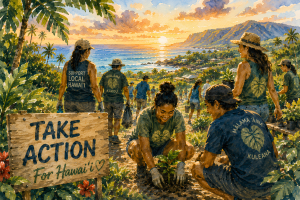
Kanaka Kava also offers opportunities for people to participate in farm workdays and learn about its agricultural practices.
Through farm visits and work-trade opportunities, participants can gain firsthand experience with the work involved in cultivating ʻawa and caring for the land.
This matters because meaningful cultural and ecological learning often begins through participation rather than observation alone.
Working with plants, understanding growing conditions, and learning from people with practical experience can deepen appreciation for the responsibilities involved in agriculture.
These opportunities also create connections between the Kona community and the Hāmākua farm.
Someone who first encounters Kanaka Kava through a meal or bowl of ʻawa may discover an opportunity to contribute through a farm workday.
That connection—from discovery to participation—is especially meaningful to Support Local Hawaii.
When people are invited to learn and contribute appropriately, cultural and agricultural knowledge can continue to strengthen community relationships.
Honoring Hawaiian History and Cultural Identity
Kanaka Kava’s mission includes sharing Hawaiian history and affirming the continuing significance of the Hawaiian Kingdom.
The ʻohana speaks openly about the relationship between cultural practices, Hawaiian identity, land, rights, and future generations.
These commitments are central to how the family understands its work.
For Kanaka Kava, growing ʻawa, serving traditional foods, and maintaining a cultural gathering space are connected to a larger responsibility to sustain Hawaiian knowledge and identity.
Support Local Hawaii recognizes the importance of allowing cultural practitioners and Native Hawaiian families to describe their own histories, values, and responsibilities in their own voices.
The role of SLH is not to redefine those traditions or speak on behalf of the people who carry them.
It is to help others discover, respect, and support the people doing this work.
Cultural stewardship begins with honoring the agency and knowledge of the people whose culture is being practiced.
Why Support Local Hawaii Recognizes Kanaka Kava
Support Local Hawaii recognizes stewards whose work strengthens Hawaii’s Culture, Communities, and Ecosystems.
Kanaka Kava represents a powerful connection across all three.
Through its ʻawa cultivation, the ʻohana maintains relationships with culturally significant plants and the land where they grow.
Through its traditional Hawaiian foods, it helps sustain culinary practices and the knowledge associated with them.
Through its hale ʻawa, it creates a space where community members can gather, share experiences, and participate in cultural life.
Through farm workdays and learning opportunities, it connects people with agricultural practice and the responsibilities of caring for the ʻāina.
And through the continuation of a family vision established in 2001, it demonstrates the importance of carrying cultural knowledge and responsibilities forward across generations.
Kanaka Kava is not simply a business that uses Hawaiian culture as part of its identity.
It is a Hawaiian ʻohana practicing and sharing its own cultural traditions through farming, food, ʻawa, and community life.
For its dedication to Hawaiian cultural continuity, ʻawa cultivation, traditional foodways, mālama ʻāina, and community connection, Support Local Hawaii is honored to recognize Kanaka Kava as a Diamond Steward.
Stewardship in Action
Hawaiian Culture, ʻĀina & Community
-
Hawaiian Cultural Continuity: Maintains a gathering place centered on Hawaiian foods, ʻawa, and cultural knowledge.
-
ʻAwa Cultivation: Grows Hawaiian ʻawa varieties on the family’s Hāmākua farm.
-
Mālama ʻĀina: Practices organic cultivation informed by relationships with land, water, plants, and community.
-
Traditional Hawaiian Foodways: Prepares and shares foods connected to Hawaiian culinary traditions.
-
Intergenerational Stewardship: Continues the vision established by ʻAnakala Zach in 2001 through his ʻohana.
-
Community Gathering: Hosts music, performances, forums, and opportunities for community participation.
-
Agricultural Learning: Offers farm workdays and opportunities to learn about cultivation.
-
Local Economy: Sustains a Hawaiian family-owned business connecting agriculture and food service.
-
Cultural Knowledge: Shares Hawaiian history and cultural perspectives through the family’s own practices and experiences.
A Living Connection Between Culture, Community, and ʻĀina
Kanaka Kava’s work illustrates something central to stewardship in Hawaiʻi.
Culture, community, and ecosystems are not isolated areas of responsibility.
They are deeply connected.
The land supports the plants.
The plants carry cultural knowledge.
The knowledge informs practices.
The practices bring people together.
And the relationships created through those practices help sustain the responsibility to care for the land.
Kanaka Kava brings those connections into everyday life.
A bowl of ʻawa served in Kona begins with plants cultivated in Hāmākua.
A traditional meal connects people with generations of Hawaiian food knowledge.
A community gathering creates space for voices, stories, and relationships.
A farm workday gives participants an opportunity to understand the work behind the food and ʻawa they enjoy.
These connections reflect the kind of stewardship infrastructure Support Local Hawaii seeks to strengthen.
Not by taking ownership of the work, but by helping people discover and support those already carrying it forward.
From the ʻĀina to Future Generations
Kanaka Kava’s story is ultimately about continuity.
The continuation of a family’s vision.
The cultivation of plants with deep cultural significance.
The preparation of traditional foods.
The sharing of knowledge.
And the relationships between people, place, and future generations.
For more than two decades, Kanaka Kava has maintained a space where these connections remain part of community life.
Its work reminds us that cultural stewardship is not simply about preserving the past.
It is also about ensuring that people have the opportunity, resources, and relationships to continue their traditions into the future.
Mahalo nui loa to the Kanaka Kava ʻohana, the people caring for the Hāmākua farm, the team serving the Kona community, and everyone helping sustain these living traditions.
This is Hawaiian culture practiced and carried forward.
This is ʻāina cared for through relationships and responsibility.
This is community strengthened through gathering and shared knowledge.
This is stewardship for generations to come.
Connect With Kanaka Kava
Business Type: Native Hawaiian Family-Owned ʻAwa Bar, Hawaiian Food Establishment & Farm
Established: 2001
Founder: ʻAnakala Zach
Location: 75-5803 Aliʻi Drive, Suite B6, Kailua-Kona, HI 96740
Farm: Hāmākua, Hawaiʻi Island
Island: Hawaiʻi Island
Stewardship Areas: Hawaiian Culture • ʻAwa Traditions • Mālama ʻĀina • Traditional Hawaiian Foodways • Indigenous Agriculture • Community Connection • Cultural Knowledge • Local Economy
Support Local Hawaii Recognition: ♦ Diamond Steward
Website: https://www.kanaka-kava.com/
Published Hours:
Monday–Thursday: 3:00 PM–10:00 PM
Friday–Saturday: 3:00 PM–11:00 PM
Sunday: 3:00 PM–10:00 PM
Support Kanaka Kava by visiting its hale ʻawa, enjoying traditional Hawaiian foods, learning about its Hāmākua farm, attending community gatherings, and exploring appropriate opportunities to participate in its agricultural work.