Kumu Hula • Mele • Hawaiian Culture • Cultural Innovation • Intergenerational Knowledge
Rooted in Tradition. Unafraid to Create. Teaching the Next Generation to Carry Hawaiʻi Forward.
Some legacies are remembered.
Others are still being built.
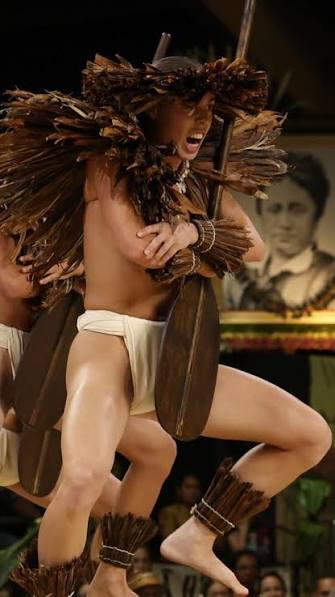
They live in the feet of a dancer.
In the rhythm of an ipu.
In the voice of a chanter.
In the discipline of a haumāna learning that hula is far more than movement.
And sometimes, a legacy reaches far beyond the place where it began — carrying Hawaiian language, rhythm, history and culture into places where people may be encountering them for the very first time.
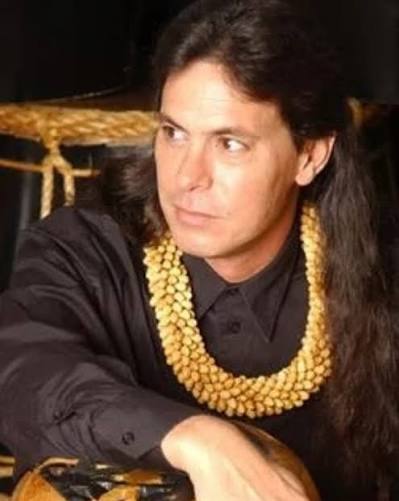
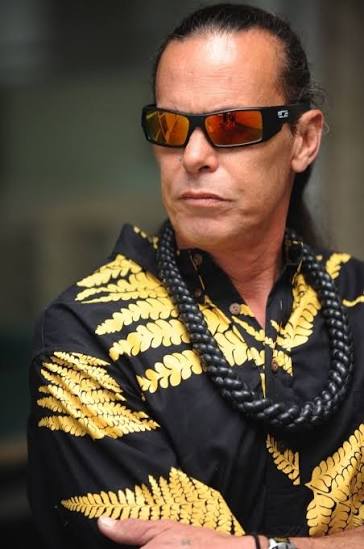
Kumu Hula Mark Kealiʻi Hoʻomalu has spent his life doing exactly that.
Dancer.
Chanter.
Composer.
Choreographer.
Musician.
Cultural practitioner.
Teacher.
Founder and Artistic Director of the Academy of Hawaiian Arts.
Mark is known around the world for a style that is powerful, unmistakable and sometimes deliberately challenging.
Millions have heard his voice without necessarily knowing his name.
Millions more have encountered his work through Lilo & Stitch, “He Mele No Lilo,” “Hawaiian Roller Coaster Ride,” performances, recordings and the dancers of the Academy of Hawaiian Arts.
But behind that global visibility is something deeper.
A kumu.
A teacher entrusted with knowledge and responsible for carrying it forward.
That is where his story as a Steward begins.
For his decades of dedication to hula and mele, his work perpetuating Hawaiian history and cultural practice, his willingness to create while remaining rooted in tradition, and the generations of haumāna carrying that knowledge forward, Support Local Hawaii is honored to recognize Kumu Hula Mark Kealiʻi Hoʻomalu as a Legacy Steward of Hawaiʻi.
A Living Legacy
A Legacy Steward does not have to belong to the past.
Some legacies are unfolding in front of us.
They are built every time knowledge passes from one generation to another.
Every time a student becomes a practitioner.
Every time a cultural practice remains alive because someone cared enough to learn it — and someone else accepted the kuleana of teaching it.
Mark Kealiʻi Hoʻomalu represents that kind of legacy.
A living legacy.
His work is not simply something audiences watch.
It moves through people.
Through dancers.
Through chants.
Through instruments.
Through language.
Through discipline.
Through performance.
Through haumāna who may one day become the kumu, artists and cultural practitioners teaching generations of their own.
That is how culture continues.
Not frozen in time.
Alive in people.
Becoming a Kumu
Mark began dancing hula at 15.
His path brought him under the instruction of Kumu Hula Darrell ʻIhiʻihilauakea Lupenui, an influential figure in the reemergence of powerful kāne hula within contemporary Hawaiian cultural life.
Mark trained with the Men of Waimāpuna, learning as both an ʻōlapa — dancer — and hoʻopaʻa — chanter.
But hula training was never simply about steps.
It included Hawaiian history.
Cultural practice.
Chant.
Discipline.
Responsibility.
The understanding that what happens on the dance floor is connected to knowledge extending far beyond it.
That foundation would remain central even as Mark began developing a style unmistakably his own.
Tradition Is Alive
There can be a temptation to think of tradition as something that must remain unchanged in order to remain authentic.
Mark’s work asks a more difficult question:
What if tradition is strong enough to create?
His approach to hula has often been described as unconventional.
Powerful.
Aggressive.
Innovative.
Sometimes controversial.
The rhythms can surprise.
The movement can challenge expectation.
The staging can feel contemporary.
But underneath the innovation is training.
Lineage.
History.
Language.
Mele.
And hula.
The Native Arts and Cultures Foundation recognized precisely this tension in Mark’s work: an artist willing to experiment and take risks while retaining the traditional identity of hula within what he creates.
That balance matters.
Because cultural perpetuation is not simply about preserving something behind glass.
It is about ensuring that culture remains meaningful enough to be practiced.
Strong enough to evolve.
Grounded enough to know where it came from.
And alive enough to have somewhere to go.
The Academy of Hawaiian Arts
In 2003, Mark founded the Academy of Hawaiian Arts in Oakland, California.
Its location itself tells an important story.
Hawaiian culture does not cease to matter when Hawaiians leave the islands.
ʻOhana move.
Communities grow elsewhere.
Keiki are born far from ancestral homelands.
And maintaining connection can become both more difficult and more important.
The Academy created a place where Hawaiian culture could continue to be learned, practiced and lived.
Its mission is to sustain the vitality of Hawaiian culture — past, present and future.
Through hula, mele, Hawaiian language, performance, cultural education and community, the Academy helps create another place for Hawaiʻi to live.
Not as imitation.
Not as nostalgia.
But through disciplined cultural practice.
Teaching More Than Dance
At the Academy of Hawaiian Arts, learning hula means learning more than choreography.
Students encounter Hawaiian history.
Language.
Stories.
Chant.
Protocol.
Cultural practices.
Dance-floor etiquette.
Music.
Discipline.
And the responsibility that comes with representing a culture.
Even the Academy’s youngest keiki are introduced to Hawaiian language, chanting and singing alongside the foundations of hula.
That matters.
Because a child learning hula is not simply learning where to place a foot or how to move a hand.
They are beginning a relationship.
With language.
With story.
With community.
With culture.
And potentially with an identity they will carry for the rest of their life.
Ke Kukui Nānā i Luna
The Academy of Hawaiian Arts is guided by the motto:
“Ke kukui nānā i luna.”
The light looked up to.
There is something deeply fitting about that idea for a hālau.
A light is not valuable because people admire the light itself.
A light is valuable because it helps others see.
A kumu’s greatest legacy may therefore not be the performances audiences remember.
It may be the people who learned where to look.
The haumāna who learned discipline.
The keiki who discovered pride.
The dancer who learned the story behind the mele.
The person living thousands of miles from Hawaiʻi who found a pathway back toward culture.
One light helps another find the way.
And eventually, those people become lights for someone else.
When the World Heard the Chant
For millions of people around the world, their first encounter with Mark Kealiʻi Hoʻomalu did not happen inside a hālau.
It happened in a movie theater.
In 2002, Disney released Lilo & Stitch.
The film was unusual.
Hawaiʻi was not simply an anonymous tropical backdrop.
Hawaiian music, language, family and cultural references were woven through the story.
And among the most unforgettable sounds in the film was Mark’s voice.
“He Mele No Lilo.”
The chant opens the film with a sound that immediately tells the listener:
This story comes from somewhere.
There is history here.
There is language here.
There is culture here.
There is Hawaiʻi here.
Mark’s work also became part of “Hawaiian Roller Coaster Ride,” bringing another unmistakably island-rooted musical presence into a film that would become beloved around the world.
His work on Lilo & Stitch earned recognition beyond Hawaiʻi, including an Annie Award nomination connected to the film’s music.
But awards do not tell the most important part of this story.
Millions of people heard Hawaiian chant.
Some for the first time in their lives.
The Doorway Matters
A movie cannot teach someone Hawaiian culture.
A song cannot explain the entirety of hula.
A three-minute recording cannot carry generations of history.
But it can do something important.
It can open a door.
A child hears “He Mele No Lilo.”
Years later, they search for the voice.
They discover Mark Kealiʻi Hoʻomalu.
Then perhaps they discover hula.
Mele.
ʻŌlelo Hawaiʻi.
Merrie Monarch.
The Academy of Hawaiian Arts.
Kumu hula.
Hawaiian history.
And eventually they begin to understand that what they first encountered as entertainment comes from a living culture.
That journey matters.
Because curiosity can become respect.
Respect can become learning.
And learning can change the way someone sees Hawaiʻi.
Beyond Lilo & Stitch
Mark’s contribution cannot be reduced to Disney.
That is simply where much of the world first encountered him.
His larger body of work includes original music, chant, choreography, cultural education and theatrical production.
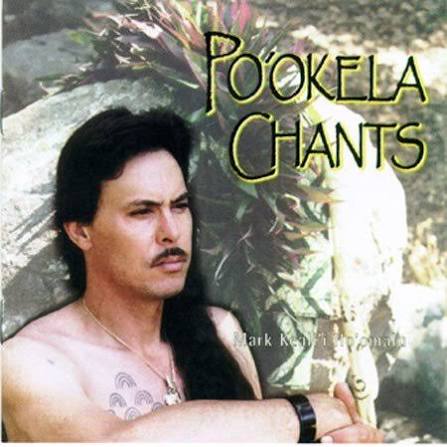
Recordings such as Call It What You Like, Poʻokela Chants and TraditionaLimits reflect an artist continually exploring what can happen when strong cultural foundations meet creative possibility.
He has designed traditional instruments and adornments including ipu heke, pahu, ʻuliʻuli and lei hulu.
He created the theatrical work Kingdom Denied.
He conceived Ka Hula Hou, an unconventional audience-judged hula competition that invited hālau to engage one another in a new competitive format.
Across these different forms, a common thread remains:
Hawaiian culture is not finished creating.
Merrie Monarch
Few stages carry the significance within hula that Merrie Monarch does.
The festival exists to perpetuate hula and Hawaiian culture, bringing hālau from Hawaiʻi and beyond together in Hilo each year.
The Academy of Hawaiian Arts has repeatedly earned a place on that stage.
Under Mark’s direction, the Academy has brought its distinctive approach to Merrie Monarch across many years, including consecutive appearances in 2024, 2025 and 2026.
For a California-based hālau, that continued presence carries particular meaning.
Distance from Hawaiʻi does not erase kuleana.
If anything, it can make cultural grounding more important.
The Academy arrives representing a community that has worked, practiced, studied, prepared and returned to Hawaiʻi ready to stand among hālau carrying the same responsibility:
Perpetuate hula.
Courage to Create
Stewardship is sometimes misunderstood as keeping everything exactly as it was.
But Hawaiʻi’s cultural history is filled with innovation.
People adapted.
Composed.
Built.
Voyaged.
Created.
Observed.
Improvised.
Learned.
And passed knowledge forward.
Mark’s work belongs within that ongoing conversation between inheritance and creation.
Not everyone will agree with every creative decision.
That is part of what makes his contribution interesting.
He has been willing to push.
To experiment.
To create rhythms and movements that make audiences reconsider what they expected hula to look or sound like.
And through it all, the foundation remains visible:
Training matters.
History matters.
Language matters.
Culture matters.
Innovation without roots can drift.
Roots without new growth cannot become a forest.
Stewardship asks us to understand both.
Why Support Local Hawaii Recognizes Mark Kealiʻi Hoʻomalu
Support Local Hawaii recognizes people who demonstrate kuleana through action.
Some protect forests.
Some restore fishponds.
Some feed communities.
Some preserve historic places.
Some teach language.
And some carry knowledge through hula and mele.
Mark Kealiʻi Hoʻomalu has dedicated decades to doing exactly that.
He learned.
He practiced.
He created.
He taught.
He built a hālau.
He created opportunities for keiki and adults to learn.
He carried Hawaiian chant into spaces where millions encountered it.
He demonstrated that Hawaiian cultural expression can remain rooted while still being bold, contemporary and unmistakably alive.
And perhaps most importantly:
He created more carriers.
More dancers.
More chanters.
More students.
More people with knowledge they can carry forward.
That is legacy.
For his dedication to hula, mele, Hawaiian history and cultural practice; for creating pathways through which generations of haumāna can learn; and for carrying Hawaiian cultural expression into the wider world without allowing it to become anonymous, Support Local Hawaii is deeply honored to recognize Kumu Hula Mark Kealiʻi Hoʻomalu as a Legacy Steward of Hawaiʻi.
Legacy Stewardship in Action
Perpetuating Hula
Kumu Hula
Decades of teaching hula as a cultural practice grounded in history, language, mele and discipline.
Academy of Hawaiian Arts
Founded a nonprofit cultural and educational institution dedicated to sustaining Hawaiian culture across generations.
Keiki Education
Creates pathways for children to encounter Hawaiian language, chant, stories, movement and cultural practice.
Carrying Mele Forward
Chant & Composition
Uses Hawaiian chant and music as living forms of cultural expression.
Cultural Instruments & Arts
His practice extends into the creation of ipu heke, pahu, ʻuliʻuli and lei hulu.
Original Works
Continues creating new expressions through music, choreography, performance and theatrical production.
Creating Doorways
Lilo & Stitch
Helped introduce millions of people around the world to the sound of Hawaiian chant and contemporary Hawaiian musical expression.
Merrie Monarch
Continues bringing the Academy of Hawaiian Arts to one of hula’s most important stages.
Hawaiians Beyond Hawaiʻi
Provides a cultural home where people living away from the islands can build and maintain meaningful relationships with Hawaiian practice.
What a Kumu Leaves Behind
There is a moment in every tradition when someone has to decide to teach.
Knowledge could stop with them.
Instead, they turn around.
They call someone forward.
Watch.
Listen.
Again.
A foot is corrected.
A word is repeated.
A rhythm is learned.
A story is explained.
A student begins to understand that what they are learning carries responsibility.
Years pass.
The student becomes experienced.
Perhaps one day that student turns around too.
Another person is waiting.
Watch.
Listen.
Again.
And the knowledge moves forward.
That may be one of the most beautiful forms of legacy there is.
Not a monument.
Not a plaque.
Not even a recording.
A human being carrying something another human being took the time to teach them.
Mark Kealiʻi Hoʻomalu’s work lives on stages and recordings.
It lives in Lilo & Stitch.
It lives at Merrie Monarch.
It lives in the Academy of Hawaiian Arts.
But most importantly, it lives in people.
Haumāna who learned.
Dancers who remember.
Keiki who grew.
Voices that learned to chant.
People who found Hawaiʻi — or found their way back toward it — through hula.
And one day, some of them will turn around.
Someone else will be waiting.
The teaching will begin again.
That is living legacy.
That is cultural perpetuation.
That is stewardship across generations.
This is Aloha in action.
Honor & Discover Mark Kealiʻi Hoʻomalu
Name: Mark Kealiʻi Hoʻomalu
Role: Kumu Hula • Chanter • Composer • Choreographer • Cultural Practitioner
Hālau: Academy of Hawaiian Arts
Founded: 2003
Cultural Practice: Hula • Mele • Hawaiian History • Hawaiian Language • Cultural Arts
Stewardship Areas: Cultural Perpetuation • Hula • Mele • Hawaiian Language • Intergenerational Knowledge • Keiki Education • Hawaiian Arts
VISIT THE ACADEMY →
CONNECT WITH AHA →
LISTEN TO MARK →
Support Local Hawaii Recognition: ♦ Legacy Steward — Living Legacy
A kumu’s legacy is not measured only by what they accomplish.
It can also be seen in who is able to carry the knowledge forward because they were taught.
Learn about the Academy.
Watch the hula.
Listen to the mele.
Look beyond the performance.
And recognize the generations of learning, discipline, knowledge and kuleana that make the performance possible.
Honor the kumu.
Support the haumāna.
Mālama the culture.
Carry it forward.