Organic Agriculture • Tropical Fruit • Local Food • Family Farming • Mālama ʻĀina
Growing With the Land in Kīpahulu
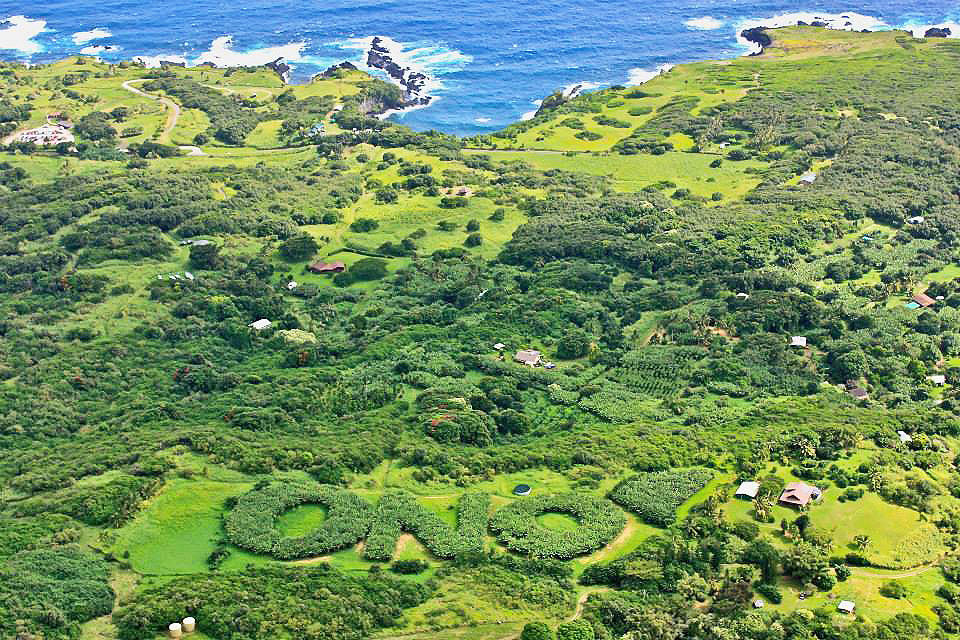
On the southeastern slopes of Haleakalā, where East Maui descends toward the sea, generations of one family have made their living by growing food.
Not for a season.
Not as a trend.
For decades.
In Kīpahulu, ONO Organic Farms has become one of Maui’s enduring examples of family farming rooted in organic agriculture, tropical abundance and a relationship with the land that passes from one generation to the next.
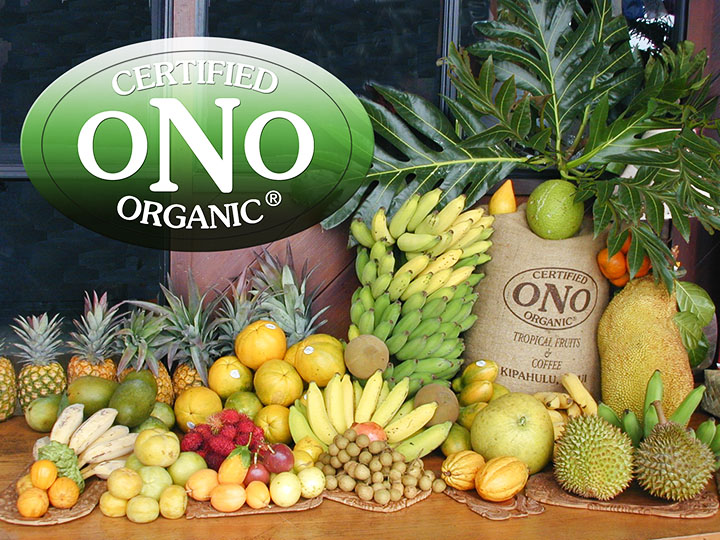
The farm grows an extraordinary diversity of tropical foods.
Bananas and papayas.
Avocados and ʻulu.
Mangoes and lilikoi.
Cacao and coffee.
Rambutan, jackfruit, soursop, lychee, durian, dragon fruit and more.
But the real story of ONO Organic Farms isn’t how many varieties grow there.
It is what happens when a family chooses to keep growing them.
Four Generations of Family Farming
ONO Organic Farms traces decades of farming in Kīpahulu, while the Boerner family’s commitment to growing and eating organically reaches back more than 60 years.
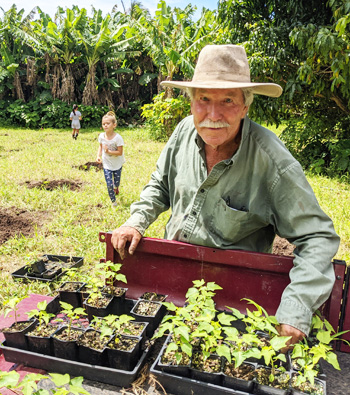
Today, the farm describes four generations of the Boerner family connected to organic farming in East Maui.
That matters.
Because a family farm is more than acreage.
It is knowledge handed down.
Knowing when something is ready to harvest.
Understanding what grows well in a particular place.
Learning how rainfall, soil, insects and seasons interact.
Recognizing when something is wrong because you have watched the same trees through years of changing weather.
Teaching children where food comes from because they can see it growing outside.
Over time, a farm becomes more than the food it produces.
It becomes a living library of knowledge about the land.
And when another generation learns how to care for it, that knowledge continues.
Organic Before Organic Was a Trend
Long before words like organic, local food and sustainable agriculture became familiar marketing language, the Boerner family was building a life around those principles.
ONO describes itself as Maui’s Original Organic Family Farm, with a family commitment to organic growing and eating stretching back more than six decades.
That history matters.
Because organic agriculture is easy to celebrate when the harvest is beautiful.
The deeper commitment is everything that happens before it.
Caring for soil.
Understanding pests and disease.
Learning what thrives.
Adapting when something does not.
Planting again after loss.
Working with natural systems rather than simply asking what can be extracted from them.
And returning the next morning to do it again.
ONO represents something Hawaiʻi needs:
People who know how to grow food here.
Not only from theory.
From experience.
Growing Food in Hawaiʻi
Walk through ONO Organic Farms and the possibilities of tropical agriculture become tangible.
Apple bananas.
ʻUlu.
Avocado.
Papaya.
Mango.
Mountain apple.
Lilikoi.
Lychee.
Longan.
Rambutan.
Cacao.
Coffee.
Jackfruit.
Starfruit.
Soursop.
Durian.
Dragon fruit.
And many more.
Some are familiar.
Others may be completely new to someone encountering them for the first time.
But together they demonstrate something important:
Hawaiʻi can grow an extraordinary diversity of food.
Every working farm therefore contributes to a much larger question facing these islands:
How much of what Hawaiʻi eats can Hawaiʻi grow?
ONO Organic Farms has spent decades answering a small part of that question from Kīpahulu.
One tree at a time.
One harvest at a time.
One generation at a time.
Teaching Through the Farm
Stewardship becomes stronger when knowledge is shared.
ONO doesn’t keep the experience of tropical agriculture behind a fence.
Through its farm experiences, visitors can walk through a working tropical farm, encounter crops at different stages of growth, taste seasonal fruit and learn about organic agriculture and the remarkable foods that can grow in Hawaiʻi.
For someone visiting from far away, it may be their first time seeing cacao growing on a tree.
Their first ʻulu.
Their first rambutan.
Their first fruit eaten close to where it grew.
Perhaps even their first meaningful encounter with a simple question:
Where does our food actually come from?
A farm experience can therefore become something more than an attraction.
It becomes agricultural education.
Taste creates curiosity.
Curiosity creates understanding.
Understanding creates appreciation.
And appreciation can change the way someone thinks about the land—and about the people who grow our food.
When Knowledge Leaves the Farm
The agricultural knowledge developed through decades of farming in Kīpahulu has also traveled beyond ONO’s boundaries.
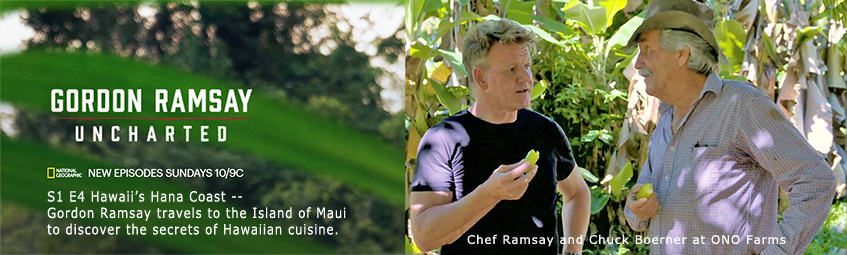
Chuck Boerner’s work has included agricultural leadership and involvement with organizations supporting organic and local farming, including service as a founding president of the Hawaiʻi Organic Farmers Association and as president of the Maui County Farm Bureau.
ONO has also shared tropical agricultural experience through consulting and education.
This matters because stewardship does not have to stop at a property line.
A farmer can grow food.
A Steward helps knowledge grow.
Something learned through years of working the land in Kīpahulu may help another farmer.
Another farm.
Another family.
Another community.
And knowledge that is shared has a chance to continue long after the original lesson was learned.
Supporting Maui’s Local Food Economy
A working farm connects land to people.
Someone prepares the soil.
Someone plants.
Someone tends.
Someone harvests.
Food moves from the farm into the community.
Money spent on locally grown food helps sustain the people producing it.
Those farmers employ people, purchase supplies, share knowledge and continue cultivating agricultural land.
The cycle begins again.
ʻĀina → Farmer → Food → Family → Community.
Keeping more of that relationship within Hawaiʻi strengthens the entire chain.
This is what support local looks like before something ever reaches a shelf or a plate.
Someone first has to grow it.
♦ Why Support Local Hawaii Recognizes ONO Organic Farms
Some stewardship is measured by what changes.
Other stewardship is measured by what survives.
For decades, ONO Organic Farms has continued growing food organically in Kīpahulu while agricultural knowledge, responsibility and connection to the land have passed from one generation of the Boerner family to the next.
Four generations.
More than six decades of commitment to organic growing and eating.
Years of agricultural leadership, education and knowledge sharing.
And a working Maui farm that continues putting food into the world.
Support Local Hawaii recognizes ONO Organic Farms as a ♦ Diamond Steward because this is more than sustainable agriculture.
It is sustained stewardship.
Caring for ʻāina is not something done once.
It is practiced.
Repeated.
Taught.
Inherited.
And carried forward.
♦ Diamond Stewardship in Action
60+ years of commitment to organic growing and eating • four generations connected to organic farming • decades farming in Kīpahulu • locally grown tropical food • coffee and cacao • agricultural education • organic-farming leadership • agricultural knowledge sharing • support for Maui’s local food economy • continued stewardship of agricultural land
Those accomplishments were not created by one extraordinary day.
They were created by ordinary days repeated for decades.
Every harvest represents work that happened long before someone took the first bite.
Soil cared for.
Trees planted.
Knowledge remembered.
Fruit picked.
A farmer still farming.
A family still connected to the land.
And another generation learning how.
One Generation to the Next
There is a particular kind of hope in planting a tree.
You care for something today whose greatest harvest may still be years away.
Someone else may sit beneath its shade.
Someone younger may eventually learn how to prune it.
And one day, the person who taught them may no longer be standing beside them.
But the tree remains.
And so does the knowledge.
This is one of agriculture’s quiet gifts.
Stewardship can outlive the Steward.
For generations, families across Hawaiʻi have carried knowledge this way—not simply by writing things down, but by doing the work together.
Watching.
Learning.
Trying.
Failing.
Planting again.
ONO Organic Farms reminds us that food security is not only about how many acres Hawaiʻi has available for agriculture.
It is also about whether there will still be people who know what to do with those acres.
That knowledge takes years to develop.
And generations to carry forward.
Grow here.
Feed here.
Teach here.
Keep the knowledge here.
This is local agriculture.
This is mālama ʻāina.
This is Aloha in action.
This is stewardship. ♦
Visit & Support ONO Organic Farms
ONO Organic Farms is located in Kīpahulu, East Maui, approximately ten miles south of Hāna Town on the southeastern slopes of Haleakalā.
Visitors can experience the working farm through ONO’s private tropical fruit farm experiences, learning about tropical agriculture while tasting seasonal fruits grown in Kīpahulu.
Supporting a local farm can be remarkably simple.
Buy something grown here.
Visit.
Learn.
Share their story.
Choose locally grown food when you can.
And remember that every piece of fruit begins with someone willing to plant something—and care for it long enough to feed somebody else.
ONO Organic Farms — Official Website
Email: onofarmsbusiness@gmail.com
Phone: (484) 844-0934
Location: Kīpahulu, Maui, Hawaiʻi
Mahalo nui loa, ONO Organic Farms, for growing food, sharing knowledge, supporting local agriculture and helping carry the kuleana of farming in Hawaiʻi from one generation to the next. 🌱♦