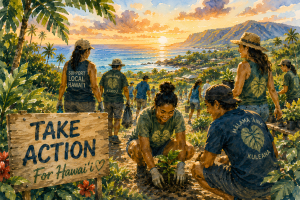
Aloha ʻĀina • Cultural Stewardship • Puna Makai • ʻŌiwi Knowledge • Community Resilience
Rooted in Puna. Guided by ʻOhana. Building a Foundation for Generations to Come.
Along the coastline of Puna, stewardship isn’t simply about protecting land.
It is about protecting relationships. Relationships between ʻohana and ʻāina.
Between kūpuna and keiki. Between cultural practice and place.
Between what previous generations have protected and what future generations will inherit.
Pōhaku Pelemaka is a grassroots nonprofit working along Puna makai to protect, perpetuate and enhance the intrinsic qualities of the Puna coastline, Native Hawaiian wellbeing, and the transmission of intergenerational knowledge and practices.
Their work brings ʻohana, community members and partners together through culturally grounded stewardship, education, research and hands-on care for the places that make Puna, Puna.
For Support Local Hawaii, Pōhaku Pelemaka represents what true stewardship looks like:
Know your place. Know your kuleana. Share your ʻike. And leave a stronger foundation for those who come next.
What Does Pōhaku Pelemaka Mean?
Pōhaku Pelemaka describes the raw, fresh rock born as molten magma cools and becomes new land.
It is an especially meaningful image in Puna.
New land. A new foundation.
Grounded, yet full of possibility.
Pōhaku Pelemaka sees its role in much the same way — helping create a strong foundation upon which future generations of Puna can grow.
Their work is rooted not only in preserving what exists today, but in strengthening the relationships, knowledge, leadership and community capacity necessary to mālama Puna tomorrow.
Aloha ʻĀina Along Puna Makai
Pōhaku Pelemaka’s vision is a thriving and resilient Puna makai where lineal families, community, natural environment, historic resources and wahi pana — storied and legendary places — are preserved and respected in perpetuity.
Their approach to Aloha ʻĀina encompasses much more than environmental conservation.
It means reconnecting.
Studying. Stewarding. Protecting. Enhancing. Maintaining. And celebrating.
It means understanding that cultural resources and natural resources are interconnected — and that the people whose families hold relationships with these places are an essential part of their future.
Kaʻakepa: Protecting a Wahi Pana
One important focus of Pōhaku Pelemaka’s work is Kaʻakepa in Puna.
Kaʻakepa is one of the remaining wahi pana along Puna makai, a place with tide pools, archaeological resources and a historic uluniu — coconut grove.
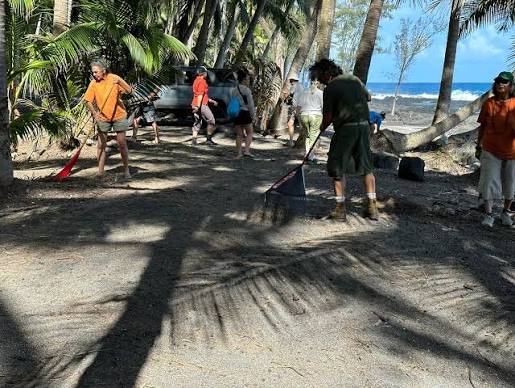
Pōhaku Pelemaka supports Nā Lauʻō ʻo Kaʻakepa, a hui of family and community members dedicated to protecting, perpetuating and enhancing Kaʻakepa.
The organization has secured access to state and county parcels in the area and provides the hui with support including liability insurance, safety training, supplies and stewardship protocols.
Their shared mission is beautifully straightforward:
Preserve and protect Kaʻakepa now and for future generations.
This is community-based stewardship in its most meaningful form:
People with relationships to a place accepting responsibility for its future.
Kahu ʻĀina Hawaiʻi
Pōhaku Pelemaka is also developing Kahu ʻĀina Hawaiʻi, a stewardship program designed to create meaningful roles for dedicated family and community members along the Puna coastline.
The vision brings cultural and environmental stewardship together with employment, education and community leadership.
Stewards help care for natural and cultural resources while educating residents and visitors about respectful practices, gathering information that can support better management decisions, promoting safety and helping protect wahi pana.
It recognizes something Support Local Hawaii deeply believes:
Stewardship itself has value.
The people caring for Hawaii’s places should have opportunities to build livelihoods, leadership and futures around that kuleana.
Passing Knowledge From Generation to Generation
One of Pōhaku Pelemaka’s greatest strengths is its emphasis on intergenerational learning.
Their Lā ʻOhana gatherings create opportunities for families and community members to come together around principles including:
Kōkua aku, kōkua mai — help and be helped.
Aʻo aku, aʻo mai — teach and learn.
Nānā i ke kumu — look to the source.
Aloha ʻĀina — love and care for the land.
Through storytelling, cultural practices, artistic work, observation and hands-on stewardship, ʻike moves between generations.
Kūpuna carry knowledge. Adults share experience. ʻŌpio develop leadership. Keiki develop relationships with place.
And the community becomes stronger because knowledge isn’t simply preserved in an archive.
It remains alive.
Niu, ʻOhana and Cultural Resilience
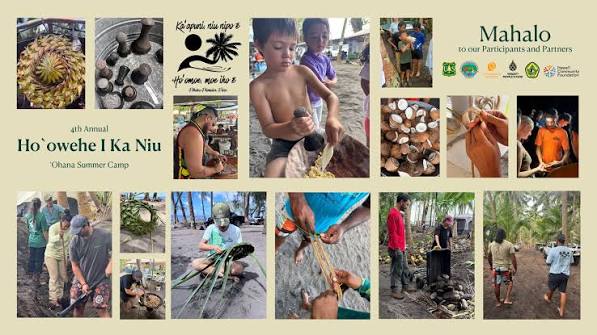
The niu — coconut — holds another important place within Pōhaku Pelemaka’s work.
Through Hiʻi Ka Malu Niu, the organization is documenting and helping restore the historic uluniu of Puna.
Its work includes mapping and characterizing niu, conducting research, gathering community knowledge and helping manage threats to these important cultural resources.
More than 1,600 coconut trees in Kaʻakepa are being scientifically documented to help establish baseline information about niu varieties. The organization also brings ʻohana together through educational programming centered around the care, knowledge and cultural practices associated with niu.
This work sits at the intersection of culture, science and community.
Western research tools can document what exists.
Indigenous knowledge helps explain relationships, meaning and responsibility.
Together, they can help inform how these resources are cared for into the future.
Watching and Learning From Kai
Pōhaku Pelemaka’s work also reaches from ʻāina to kai.
Through Hoʻomakua i ke Kai a Pele, community members participate in marine monitoring, research, observation and knowledge sharing.
The program promotes culture, education, research and workforce development while creating opportunities for people of different ages to engage directly with Puna’s marine environment.
Again, the approach begins with relationship.
Before we can protect a place, we must observe it.
Before we can understand change, we must establish what is there.
And before we can make good decisions about Hawaii’s resources, the people who know those places must have a meaningful role in those decisions.
Stewardship Creates Resilience
Puna knows change.
The district continues to live with the impacts of the 2018 Kīlauea eruption, including challenges involving roads, access, infrastructure and communities rebuilding their relationships with landscapes dramatically transformed by Pele.
At the same time, Puna makai faces increasing pressures as visitors and new residents discover places long cared for by local ʻohana.
Pōhaku Pelemaka is working toward solutions before increased access creates greater impacts.
That means education.
Protocols. Community stewardship. Data. Partnership. Leadership.
And ensuring that the people of Puna remain directly involved in decisions affecting Puna.
This, too, is resilience.
Resilience isn’t simply recovering from what happened yesterday.
It is building the capacity to care wisely for what happens tomorrow.
Why Support Local Hawaii Recognizes Pōhaku Pelemaka
Support Local Hawaii recognizes stewards whose work strengthens the relationships between people, place and community.
Pōhaku Pelemaka exemplifies that work.
They are protecting wahi pana.
They are helping ʻohana steward Kaʻakepa.
They are documenting and caring for historic uluniu.
They are monitoring marine resources.
They are creating opportunities for cultural and environmental stewardship.
They are bringing generations together.
They are helping ʻopio become leaders.
And they are building partnerships so community knowledge has a meaningful place in the future of Puna makai.
For this sustained commitment to Aloha ʻĀina, Native Hawaiian wellbeing, cultural knowledge and the people and places of Puna, Support Local Hawaii is proud to recognize Pōhaku Pelemaka as a Hawaiʻi Steward.
Stewardship in Action
Protecting Puna Makai
Kaʻakepa Stewardship Supporting Nā Lauʻō ʻo Kaʻakepa in protecting one of Puna makai’s treasured wahi pana.
Kahu ʻĀina Hawaiʻi Building a community-based cultural and environmental stewardship model that connects mālama ʻāina with education, leadership and employment.
Hiʻi Ka Malu Niu Documenting and helping restore Puna’s historic uluniu and perpetuating knowledge and practices surrounding niu.
Hoʻomakua i ke Kai a Pele Connecting culture, community, research and marine monitoring.
Lā ʻOhana Creating intergenerational spaces where ʻohana gather to teach, learn, share moʻolelo, practice Aloha ʻĀina and strengthen relationships.
ʻĀina-Based Education Creating hands-on opportunities to practice kilo, mālama ʻāina, kuleana, cultural learning and community leadership.
Building the Pelemaka Foundation
Perhaps the most beautiful way to understand this organization is through its own name.
New rock does not immediately become a forest.
First, there is a foundation.
Then life takes hold.
Roots grow.
Generations follow.
Pōhaku Pelemaka is helping build that kind of foundation for Puna.
A foundation grounded in ʻāina.
Strengthened by ʻike.
Protected through kuleana.
Shared across generations.
And built so the keiki and moʻopuna of today can inherit a Puna where the places, practices and relationships that shaped their kūpuna are still alive.
Mahalo nui loa to Pōhaku Pelemaka, its ʻohana, stewards, volunteers and community partners for caring for Puna makai and laying a foundation for generations yet to come.
Aloha ʻĀina. Aʻo aku, aʻo mai. Mālama Puna.
This is stewardship in action.
Connect With Pōhaku Pelemaka
Organization: Pōhaku Pelemaka Organization Type: 501(c)(3) Grassroots Nonprofit Based In: Pāhoa, Puna, Hawaiʻi Island Service Area: Puna Makai Stewardship Areas: Aloha ʻĀina • Cultural Stewardship • Coastal Stewardship • Native Hawaiian Wellbeing • Intergenerational Knowledge • ʻŌpio Leadership • Natural Resource Protection • Community Resilience Support Local Hawaii Recognition: Hawaiʻi Steward
Learn more, participate in community stewardship, or support Pōhaku Pelemaka’s work building a strong foundation for Puna’s future.